
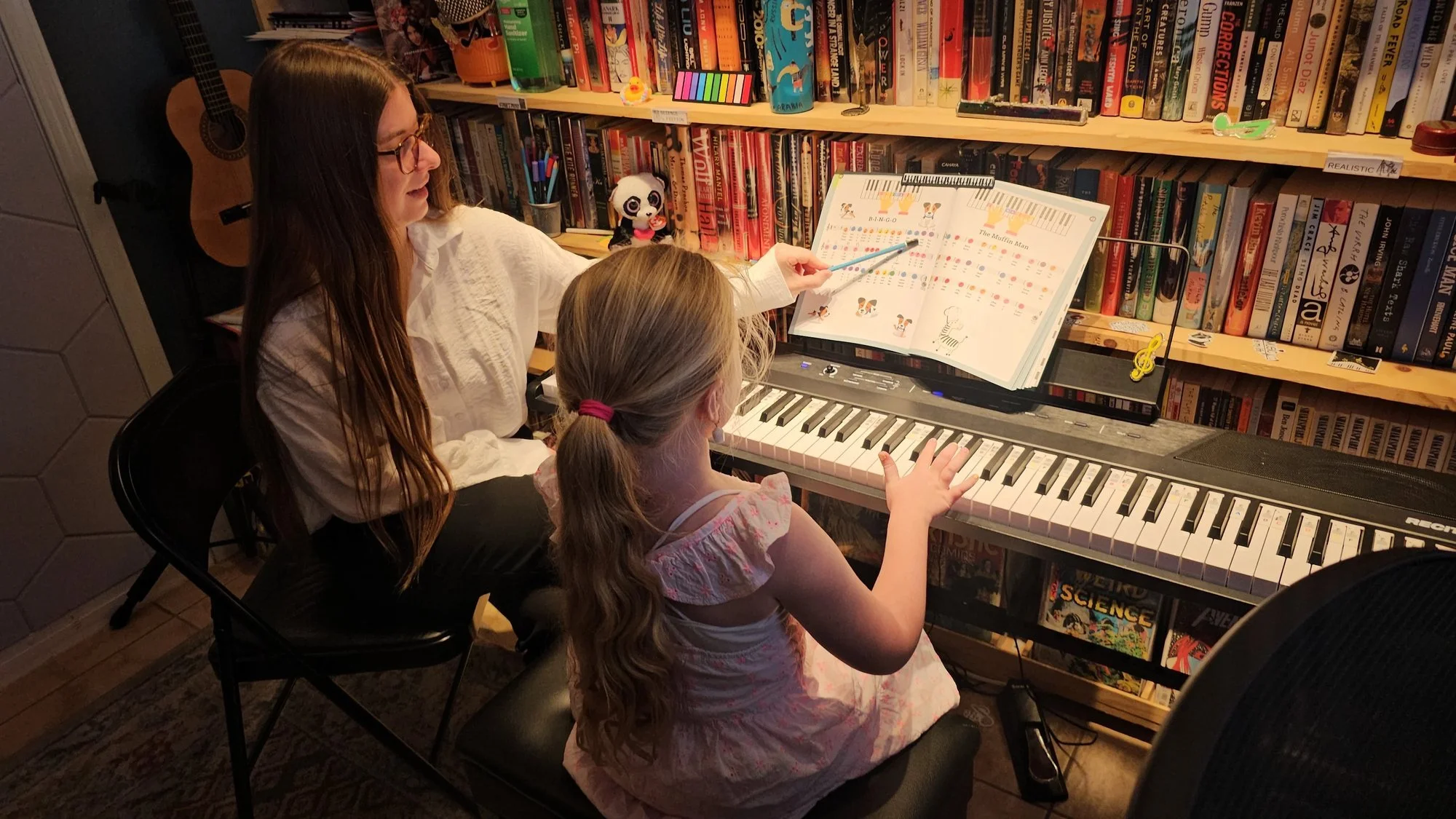
What to Expect at Your Child's First Private Music Lesson
Starting private music lessons is exciting, but it is normal for children and parents to feel a little unsure about the first appointment. A first lesson is not a performance or a test. It gives Alona time to help your child feel comfortable, learn about their interests, and begin at a pace that fits their experience and learning style.
Cave Creek Music Academy offers personalized piano, violin, and voice lessons for children and teens at its private Tatum Ranch home studio. Online lessons are also available. Here is what families can expect before, during, and after lesson one.
What should my child bring?
The most important things to bring are a positive attitude and a willingness to learn. The rest depends on the instrument:
Piano: No instrument is needed at the lesson. Having a piano or keyboard at home is helpful for practicing afterward, but your child can attend the first lesson before you purchase one.
Violin: If your child already has a violin, bring the instrument, bow, and shoulder rest. If not, that is completely fine. Alona prefers to measure young students before recommending a violin size because the correct fit makes learning more comfortable.
Voice: No special equipment is required. Bring a water bottle and wear comfortable clothing.
Parents are also welcome to bring questions about lessons, instruments, or practice at home.
Does my child need an instrument before the first lesson?
Not necessarily. Piano and voice students can attend their first lesson before purchasing anything.
Beginning violin students should be measured before a family chooses an instrument. Children's violins come in several sizes, and a violin that is too large or too small can make learning harder. Renting first is a practical option for many families. After measuring the student, Alona can also suggest appropriate, affordable beginner instruments to consider.
If your child is still choosing among piano, violin, and voice, you do not have to make a permanent decision before contacting CCMA. Musical interests, physical comfort, practice access, and the child's enthusiasm can all help guide the choice.
What happens during the first lesson?
The first few minutes focus on helping the student feel comfortable. Alona gets to know the child, asks about their musical interests, explains how lessons work, and observes their attention span, coordination, and learning style. This helps her adapt later lessons to the student's personality and goals.
A typical first activity depends on the instrument:
Piano: Learning finger numbers and playing simple patterns on the keyboard.
Violin: Learning how to hold the violin and bow with comfortable posture, then beginning to make the first sounds.
Voice: Trying breathing exercises and singing a familiar song so Alona can understand the student's current range and comfort.
The aim is for the student to leave feeling successful, encouraged, and interested in returning—not to master everything in one session.
Should a parent stay during the lesson?
For younger children, generally ages 4–6, Alona encourages a parent to stay during the lesson, especially at the beginning. This can help the child feel secure and lets the parent learn how to support practice at home.
As students become older and more independent, parents may wait nearby or return at the end of the lesson. During online lessons, younger students usually benefit from having a parent close enough to help if needed.
How much should a beginner practice?
Consistency matters more than one long practice session. Alona generally recommends:
Ages 4–6: 5–10 minutes on most days.
Ages 7–10: 10–20 minutes on most days.
Older beginners: 20–30 minutes on most days.
These are starting guidelines, not rigid requirements. After each lesson, Alona explains the week's assignments to both the student and parent so everyone understands the next practice goals.
What progress might we see during the first month?
Every child progresses differently. Age, starting point, attendance, home practice, goals, and instrument all affect the pace. Early milestones often include:
Piano
Recognizing finger numbers.
Finding notes on the keyboard.
Playing simple beginner songs.
Violin
Holding the violin and bow with improving posture.
Playing open strings with better bow control.
Beginning to learn simple rhythms.
Voice
Developing healthy breathing habits.
Matching pitch more accurately.
Singing short songs with growing confidence.
The focus is on building confidence and sound technique rather than promising a particular result by a fixed date.
What if the first instrument is not the right fit?
Alona looks first at the student's interest, motivation, and enjoyment—not only at how quickly they learn. If a child is struggling, she normally adjusts the teaching approach, lesson activities, or pace before recommending a change.
Sometimes a student discovers a stronger connection with another instrument or enjoys a combination such as piano and voice. The goal is to find a musical path that keeps the student engaged and excited to learn.
Request your child's first lesson
The first appointment is a standard paid lesson, not a test or audition. Tell CCMA your child's age, preferred instrument, experience, goals, and scheduling needs. CCMA replies within 24 hours with available times and the next steps.
Current lesson rates:
Piano: $40 per half hour or $70 per hour.
Voice: $40 per half hour or $70 per hour.
Violin: $50 per half hour or $90 per hour.
CCMA currently has no registration fee or long-term lesson commitment. Standard cancellation and rescheduling policies apply.